

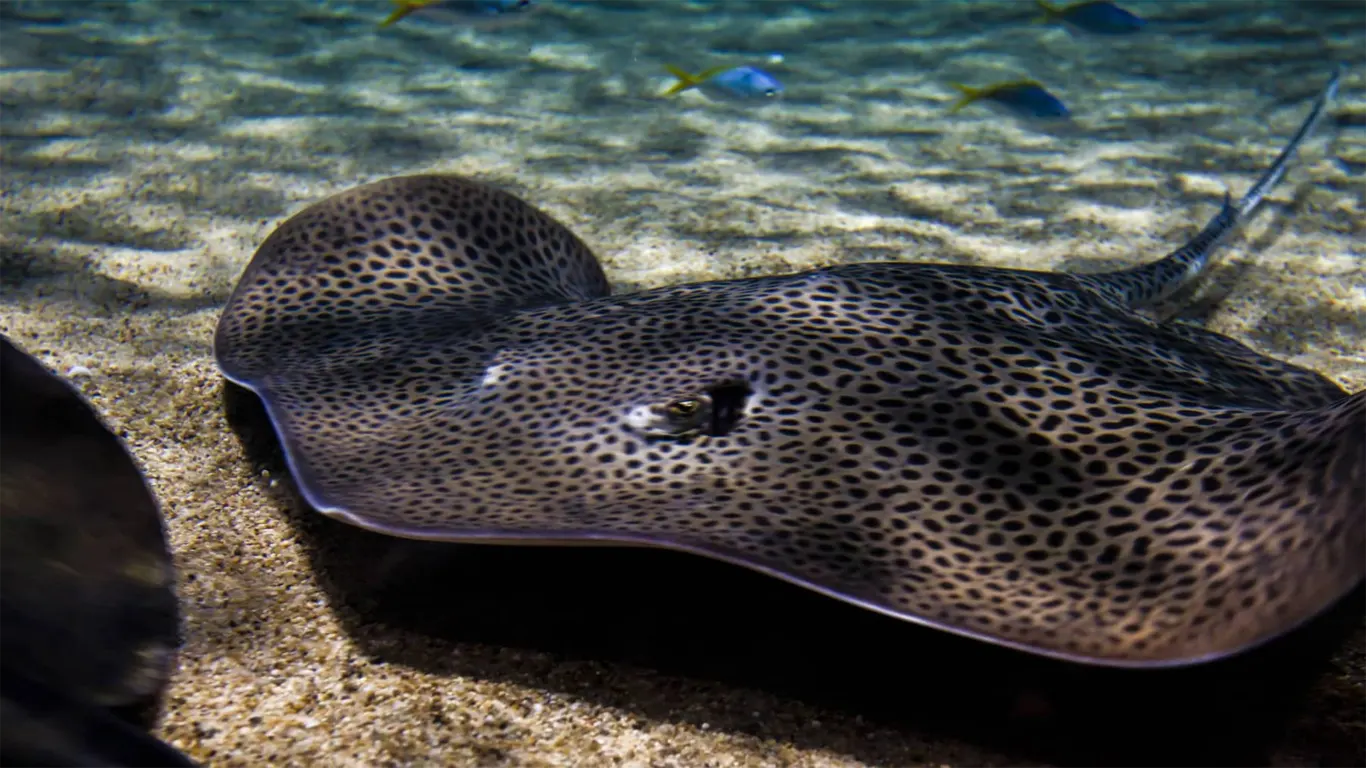
Few creatures transform an aquarium into a living dream like the freshwater stingray. With their undulating pectoral fins, hypnotic movements, and silent grace, rays glide like underwater birds — elegant, mysterious, and deeply intelligent. But behind their serene beauty lies a complex set of needs that, if ignored, can lead to stress, disease, or worse.
At Aquarium Fish Farm, we’ve carefully bred and shipped hundreds of rays — from Pure Breed Black & Whites to rare Albino Pearls — and we’ve learned that success isn’t about fancy gear. It’s about mimicking the riverbeds of the Amazon, Southeast Asia, and South America, where these animals evolved.
If you’re considering a stingray — or already have one — this guide will help you create not just a tank, but a true sanctuary.
1. The Tank: Size, Shape, and Substrate Matter Most
Stingrays are bottom-dwellers with massive surface-area needs. Unlike fish that swim vertically, rays spread out — their disc diameter can equal or exceed their listed size (e.g., a “9-inch” ray may span 10–12 inches across).
Minimum Tank Size by Ray Size:
- Juveniles (5–8” disc): 125–180 gallons
- Sub-Adults (9–14”): 250–300 gallons
- Adults (15”+): 400+ gallons
Critical Design Rules:
- Go wide, not tall. A 72” x 24” footprint is far better than a tall 55-gallon.
- No gravel. Use fine, smooth sand (like pool filter sand) — rough substrates can abrade their delicate skin and cause fatal infections.
- Open swimming space. Avoid tall decor. Rays need unobstructed floor access.
- Secure lid. While they don’t jump, surface agitation can cause stress — and evaporation must be minimized.
2. Water Quality: The Invisible Lifeline
Stingrays are exquisitely sensitive to ammonia, nitrites, and dissolved organics. Their thin skin absorbs toxins directly — making water quality non-negotiable.
Ideal Parameters:
- Temperature: 80–84°F (use a heater with guard)
- pH: 6.8–7.4 (stable is more important than “perfect”)
- Ammonia/Nitrite: 0 ppm — always
- Nitrates: < 15 ppm (lower than most fish!)
Filtration Tips:
- Use canister filters or sumps with high flow (10x tank volume per hour).
- Avoid undergravel filters — they trap waste under the sand.
- Perform 30–50% water changes weekly with pre-mixed, temperature-matched water.
🚫 Never use copper-based medications — rays are extremely sensitive.
3. Feeding: Nutrition for Longevity
In the wild, stingrays hunt worms, crustaceans, and small invertebrates by sifting through sand. In captivity, poor diet is the #1 cause of “wasting disease” — slow weight loss despite eating.
Best Foods:
- Live blackworms, earthworms, or ghost shrimp
- Frozen bloodworms, mysis shrimp, or krill
- High-quality sinking carnivore pellets (soaked)
Feeding Technique:
- Use feeding tongs to place food directly on the sand near the ray.
- Feed once daily for juveniles, every other day for adults.
- Watch for a gently rounded belly — not sunken, not distended.
Never feed:
- Goldfish (carries disease and thiaminase)
- Beef heart (causes fatty liver)
- Flakes or floating foods (they won’t eat them)
4. Behavior & Health: Reading the Signs
Stingrays communicate through posture, movement, and color. Learn their language:
✅ Healthy Signs:
- Smooth, rhythmic “flying” motion
- Curious approach to feeding time
- Consistent coloration (no white patches or red streaks)
⚠️ Warning Signs:
- Lying motionless for hours
- Rapid breathing or clamped pectoral fins
- Rubbing on substrate (indicates parasites or irritation)
- Loss of appetite for >48 hours
If you notice any of these, contact an experienced aquarist immediately. Rays decline fast when unwell.
5. Ethical Ownership: A Lifelong Promise
Freshwater stingrays can live 10–15+ years in proper care. They form bonds, recognize caregivers, and respond to routines. But they are not beginner pets — and they’re not “cool decorations.”
At Aquarium Fish Farm, we only sell rays to aquarists who:
- Have prior experience with large or sensitive species
- Confirm their tank is fully cycled and stable
- Commit to our free setup consultation before shipping
Every ray we ship is captive-bred, humanely raised, and packed in oxygen-rich, temperature-controlled containers — with a 100% Live Arrival Guarantee.
Because to us, a stingray isn’t inventory. It’s a miracle of evolution — and it deserves nothing less than reverence.
Final Thought
Creating a stingray sanctuary isn’t about perfection. It’s about empathy. It’s about soft sand under their disc, clean water through their gills, and the quiet joy of watching them glide — not as a spectator, but as a guardian.
If you’re ready to take on this noble responsibility, we’re here to walk with you every step of the way.
Dive deeper:
Explore our ethically bred rays — including rare Albino Pearls and Motor Stingrays — all raised on our farms with science and soul.